
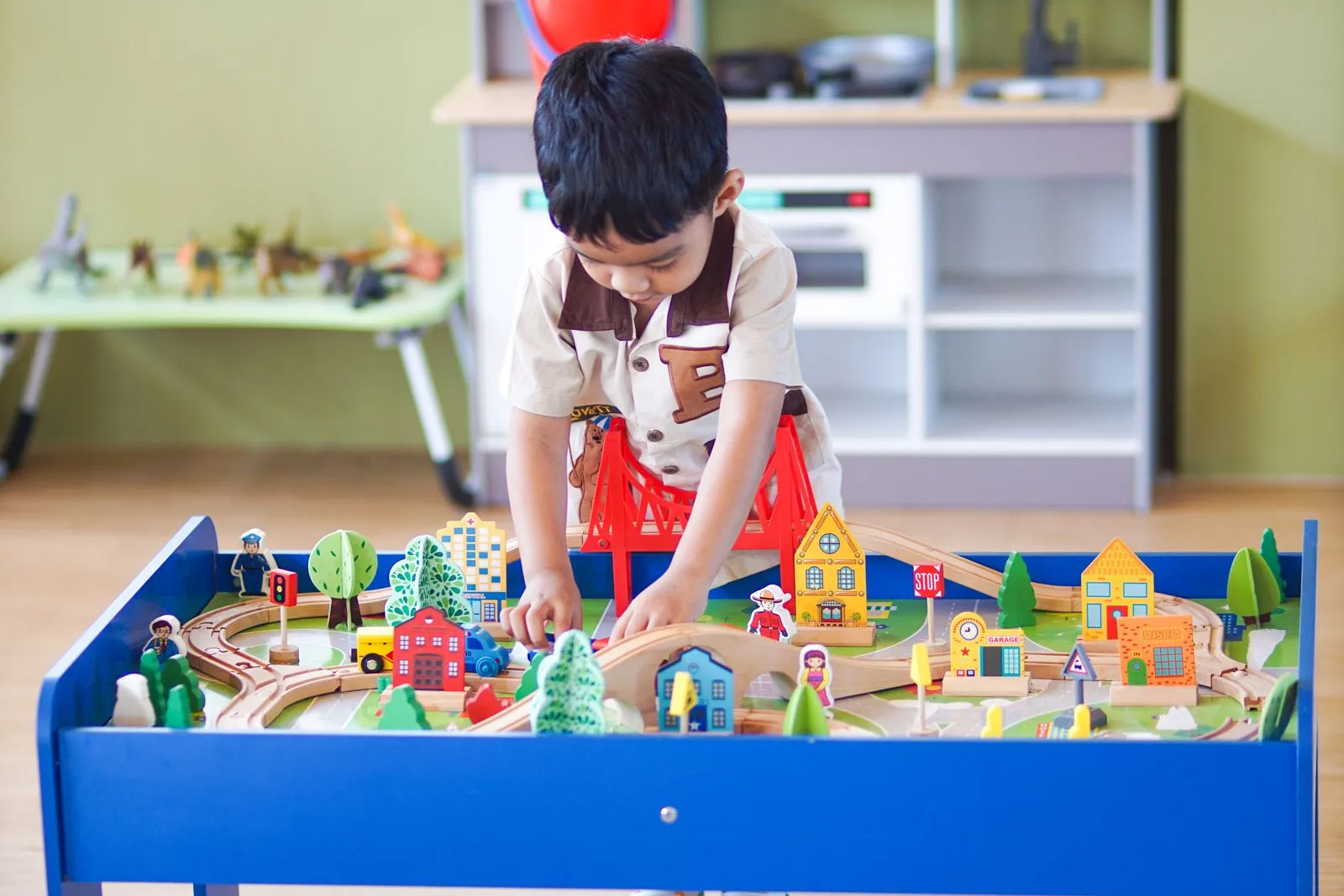
A pile of blocks can become a bridge, a spaceship, or something a child has never seen before. Construction play gives young children room to shape their own ideas, test what works, and change direction when a plan falls apart. Pair building with pretend play and hands-on materials, and ordinary play can invite rich exploration. You do not need elaborate equipment or a complicated activity plan. A few open-ended materials and time to experiment can make a meaningful difference.
Let Children Lead the Build
Offer blocks, cardboard boxes, magnetic tiles, or large interlocking pieces, then let your child decide what to make. Avoid starting with a picture they must copy. An open invitation such as “What could we build for your toy animals?” gives a little direction while leaving the design in the child’s hands.
When a structure tips over, pause before fixing it. Ask what your child notices and what they might try next. They may widen the base, use a different piece, or begin a new design. Treating a change of plan as part of play helps children explore possibilities without expecting every idea to work on the first try.
Add a Pretend-Play Purpose
Give a construction project a story. A few blocks might become a home for stuffed animals, a garage for toy cars, or a station where pretend travelers stop. The story gives children a reason to make choices: a toy needs a doorway, a car needs a ramp, or a character needs somewhere to rest.
Join the story without taking over. Ask questions like “Who uses this room?” or “How will the visitors get inside?” Children can answer through words, gestures, or by changing the structure. Their ideas may lead in surprising directions, and following those turns keeps the play personal and imaginative.
Explore Materials and Textures
Combine building pieces with safe household materials such as clean cardboard tubes, paper, fabric scraps, and empty boxes. Children can compare what bends, stands, slides, or stacks. Offer a small selection at a time, and supervise closely, especially with materials that could pose a choking or entanglement risk for younger children.
Invite children to describe what they discover: “Which piece makes the strongest roof?” or “What happens if we put this underneath?” These questions encourage observation without prescribing an answer. Keep the focus on trying ideas, not producing a polished object; a build that changes several times is still worthwhile exploration.
Make Space for Creative Thinking
Set aside a clear, reachable play area where children can leave a project in progress. If a tower or pretend town must be cleared immediately, children may have less time to return to an idea and develop it further. A tray or low shelf can help keep unfinished builds together when the space is needed for other activities.
Notice the thinking behind the result. Instead of praising only a tall or neat structure, comment on a choice you saw: “You tried a wider base when the tower wobbled.” This shows that experimenting matters. Follow your child’s interest, offer materials when useful, and allow quiet stretches for independent play.
Creative thinking grows through small moments of imagining, testing, and adapting. Offer a few open-ended materials, add a playful prompt, and let your child make the decisions. If you’re looking for a welcoming place to build and explore together, Little Rock Playworks offers a construction play cafe in Little Rock.